
01
Measure
PF, THD and load profile survey
Product detail
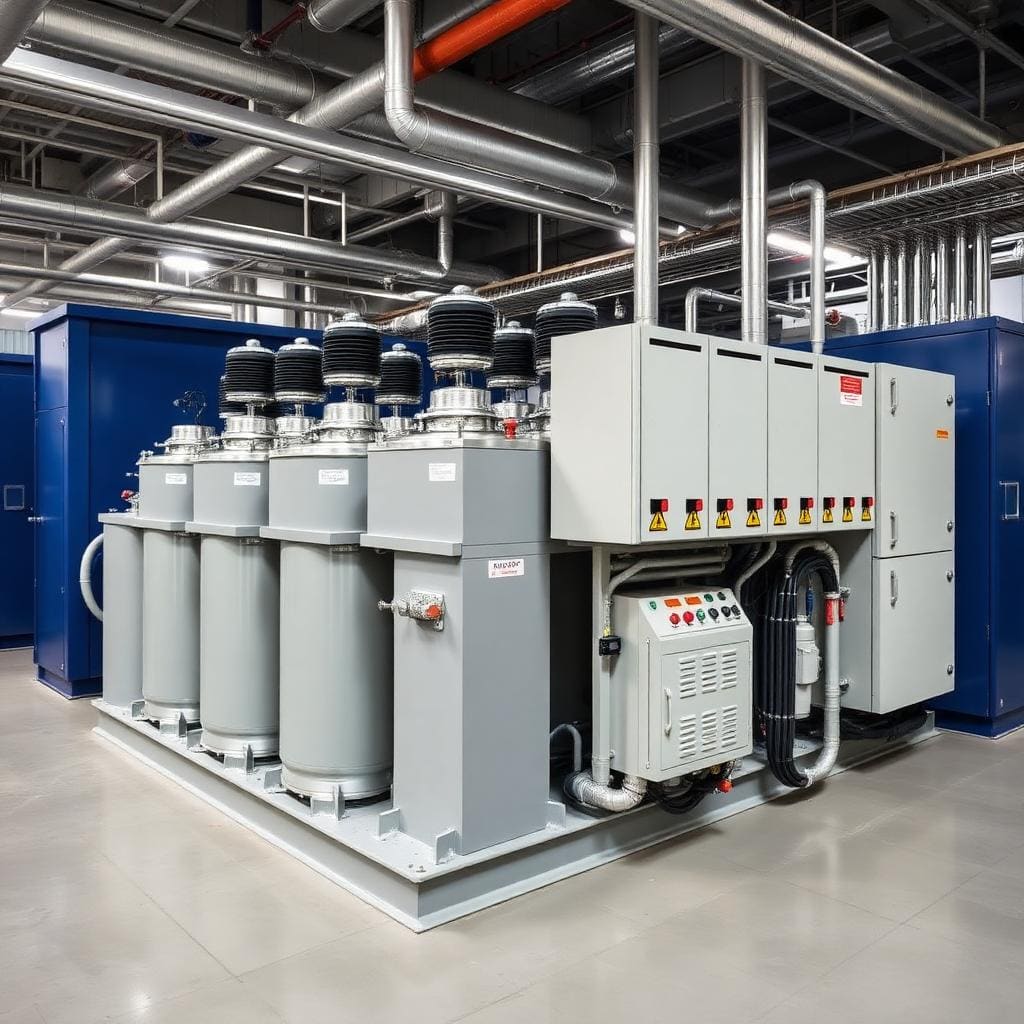
Product snapshot
APFC, harmonic filtering and power-quality metering for cleaner, lower-penalty LV systems.
PF, THD and load profile survey
6/12-step APFC controller logic
Capacitors, reactors and AHF options
Target PF and harmonic performance check
PF target
Load kW, starting PF, target PF and kVAr sizing
Harmonics
THD survey, 7%/14% detuning and AHF selection
Switching
Contactor or thyristor stages by load profile
Cooling
Capacitor heat load, fan/filter and thermostat planning
Automatic Power Factor Correction (APFC) banks, detuned reactor banks, active harmonic filters, and power quality analysers to eliminate KPLC power factor penalties and improve system efficiency.
Nairobi Power Engineers designs and manufactures the assembly around site duty, prospective fault level, installation access, service continuity, cable entry and maintainability. The supply can be configured with ABB, Schneider Electric or CHINT equipment according to duty, lead time and lifecycle support.
All aspects of the design are detailed in 2D and 3D CAD options. Distribution assemblies are available to the same specification across main, sub-main and final-board levels.
OEM selection basis
Anatomy of an NPE panel
NPE builds automatic, multi-step power factor correction panels — and detuned versions for harmonic-rich installations — at our Nairobi manufacturing centre. The numbered call-outs map the components inside each lineup.
Build standard
Rated output
Up to 1250 kVAr
Voltage
400 V, 50 Hz
Control
Multi-step auto
Protection
HRC fuses
Enclosure steel
1.5–2 mm
Harmonics
Detuned option
Ventilated enclosures with power capacitors, PF regulators and voltage-stabiliser options for industrial power quality.
Technical detail library
Filter the relevant component trading lines and bespoke assemblies for this product family by market segment. Open the cards for ratings, source basis, build options and direct contact links.
Engineering Calculator
Enter parameters for real-time IEC/KPLC-standard sizing. Results update dynamically.
Sizing results
Required kVAR
-
Recommended Stages
-
Contactor Current
-
Detuned Reactor Sizing
-
* For reference only. NPE engineering verifies configurations prior to build.
Our Power Quality & Correction solutions are custom-engineered and assembled locally at our Baricho Road workshop in Nairobi. A standard build includes high-quality modular enclosures, premium copper busbars (rated for local environmental conditions), type-tested circuit breakers or control elements from trusted global partners (ABB, Schneider Electric and CHINT), and comprehensive routine test certifications before delivery.
All assemblies comply with KEBS and EPRA regulations. You should confirm the required operational voltage (typically 415V three-phase or 240V single-phase in Kenya), rated current, prospective fault levels (e.g., 35kA or 50kA as per KPLC system requirements), form of separation (up to Form 4b), IP rating (IP31 indoor / IP54 for dust-heavy sites), and cable entry orientation (top or bottom entry).
NPE starts with the single-line diagram, load schedule and operating sequence, then selects the power quality and correction path, device families, enclosure format, controls and testing requirements.
Send the single-line diagram, load schedule, incoming supply details, fault level if known, preferred OEM brand, cable entry direction, installation environment and delivery location.
Yes. NPE can quote ABB, Schneider Electric, CHINT or a mixed-OEM architecture according to rating, availability, monitoring requirement, lifecycle support and budget.
Yes. Metering, alarms, Modbus, Ethernet, BMS contacts, SCADA points and commissioning checks can be included where the selected product family supports them.
Product enquiry
Use the calculators for a first-pass engineering check, then send us the SLD and load schedule for a project-ready selection.
Every power-quality and correction panel NPE builds is sized from your metering data and harmonic survey, assembled and tested at our Baricho Road workshop, and handed over with the commissioning records your consultant expects. Use the enquiry routes above for a sized quotation, or the form alongside to schedule an engineer.
Electrical service you can count on
When power quality and correction equipment fails, you need fast, reliable help from experienced engineers. We offer around-the-clock emergency support across Nairobi and East Africa — keeping your plant safe and powered, day or night. Whether it is an urgent breakdown or a scheduled repair, our team is ready to respond whenever you need us.
Power factor correction costs vary significantly depending on several key factors. Here is what you need to know to make informed decisions and avoid unexpected expenses.
The price of a power factor correction package depends on the load schedule, fault level, enclosure form and IP rating, plus the OEM equipment you specify. Site conditions and delivery timelines also move the number.
Our engineers issue itemised quotations covering equipment, assembly, factory testing and delivery — no hidden fees. You know exactly what to expect before any work begins.
Scheduled inspection, thermographic surveys and torque checks catch small issues early, helping you avoid major repairs. Planned maintenance extends system life and protects uptime.
Whether it is a scheduled upgrade or an urgent call, our Nairobi workshop at Baricho Road responds quickly and gets the job done right — minimising downtime and keeping you safe.
If you are ever unsure or feel unsafe around an energised assembly, do not take chances — call a licensed engineer. Safety always comes first. Feel free to contact us or give us a call.
+254 0737-944-014