
Irrigation and transfer
Establish total dynamic head, flow and water conditions before selecting a pump and motor.
SOLUTIONS / APPLICATION GUIDE
Plan power for irrigation, processing, ventilation and cold storage around the seasonal duty. Start with flow, head, operating hours and critical loads.
Enable JavaScript for interactive estimates or ask our engineering team.
CHOOSE YOUR APPROACH
Establish total dynamic head, flow and water conditions before selecting a pump and motor.
Review conveyors, mixers and mills for starting load, dust and cleaning conditions.
Separate critical refrigeration loads and verify backup starting capacity and run time.
BUILD A USEFUL BRIEF
No. Water demand, storage, pump curves, daily irradiance and available pumping hours must be considered together.
COMPONENTS THAT COMPLETE THE APPLICATION
Start with the equipment duty. Add the control, protection and measurement functions that your project needs; these are options to review, not a pre-approved assembly.
Images are AI-generated illustrations of equipment categories, not LOVATO model photographs. Confirm dimensions and ratings from the selected model datasheet.
Automation & control
Control filling or pumping from reliable level signals.
Confirm: Fluid properties · probe or float · dry-run strategy.
Compare selection details ↗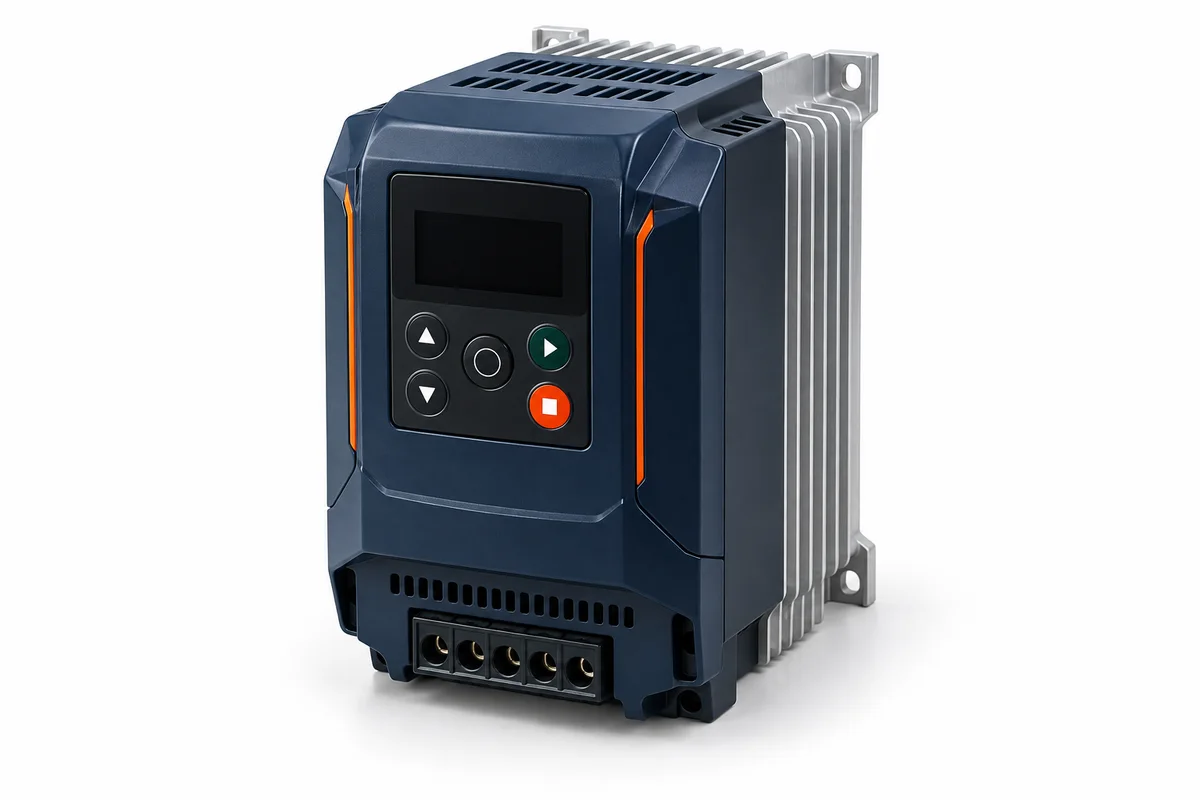
Motor protection & control
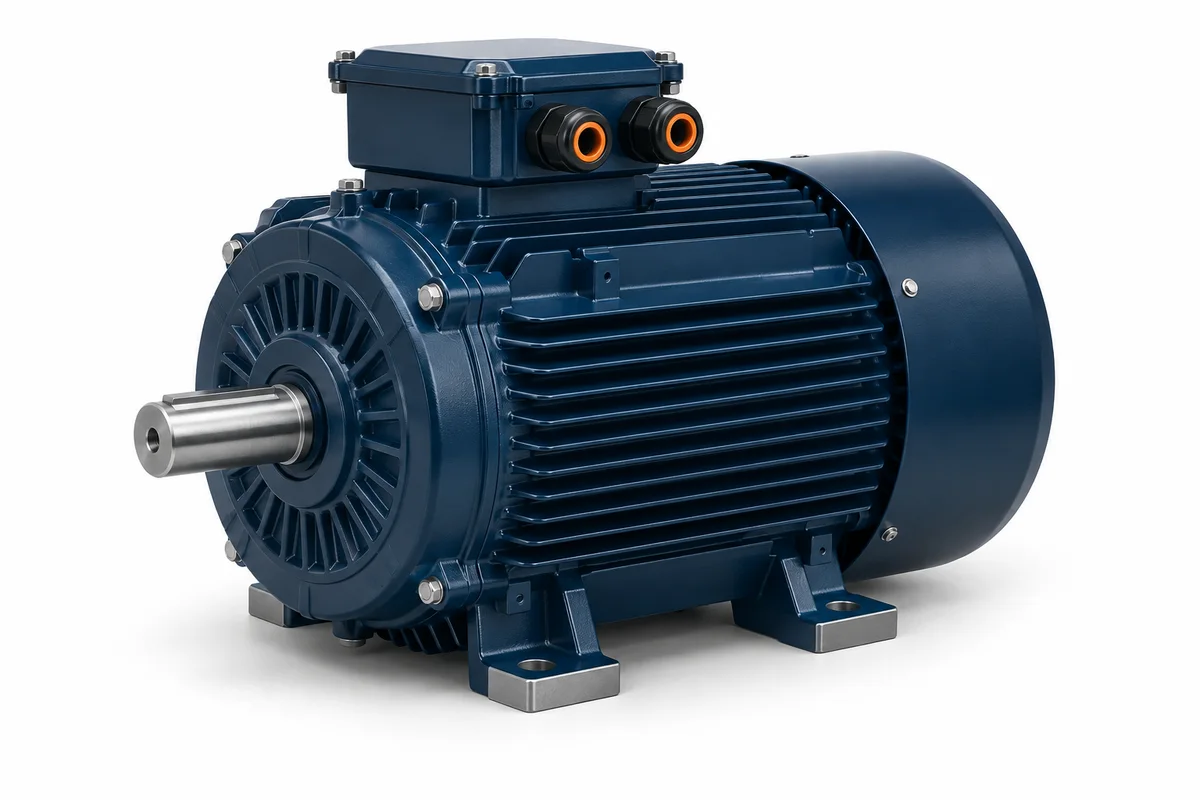
Match motor speed to process demand where the application permits.
Confirm: Motor current · load torque · speed range and cooling.
Compare selection details ↗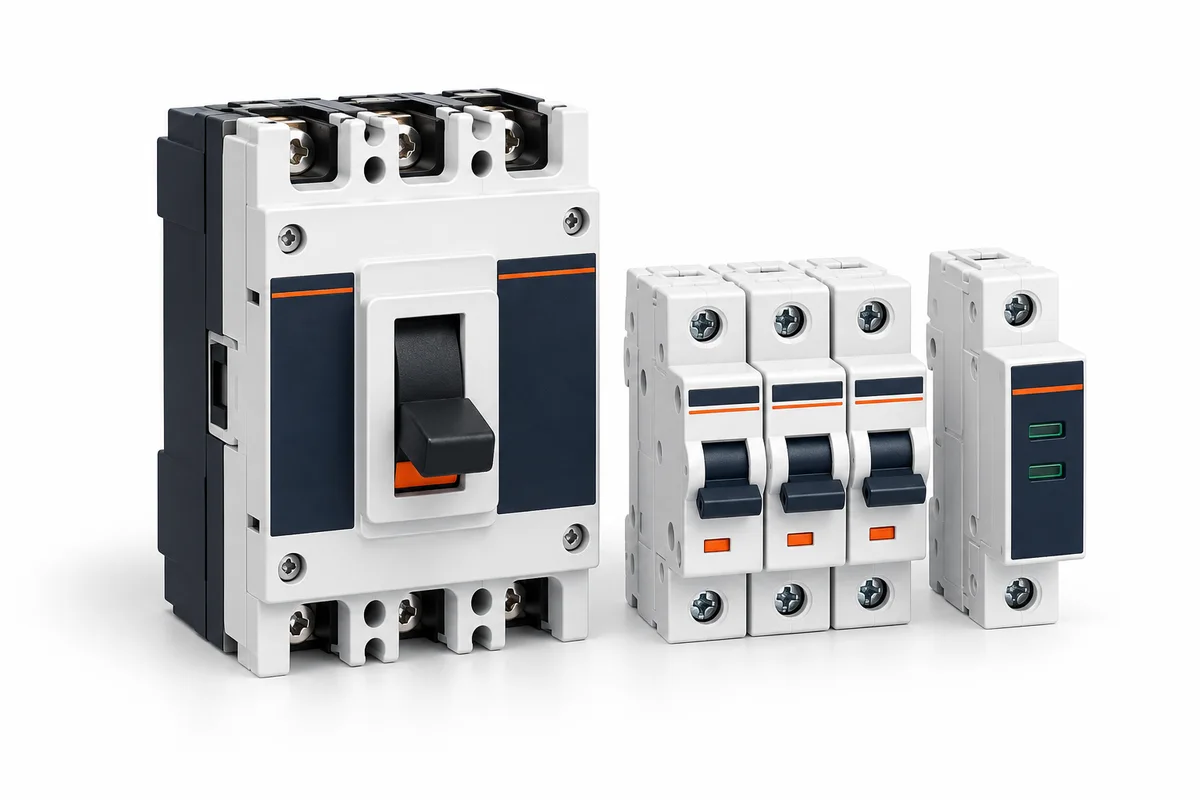
Motor protection & control
Protect individual motor circuits as part of a coordinated starter.
Confirm: Motor full-load current · fault level · starter coordination.
Compare selection details ↗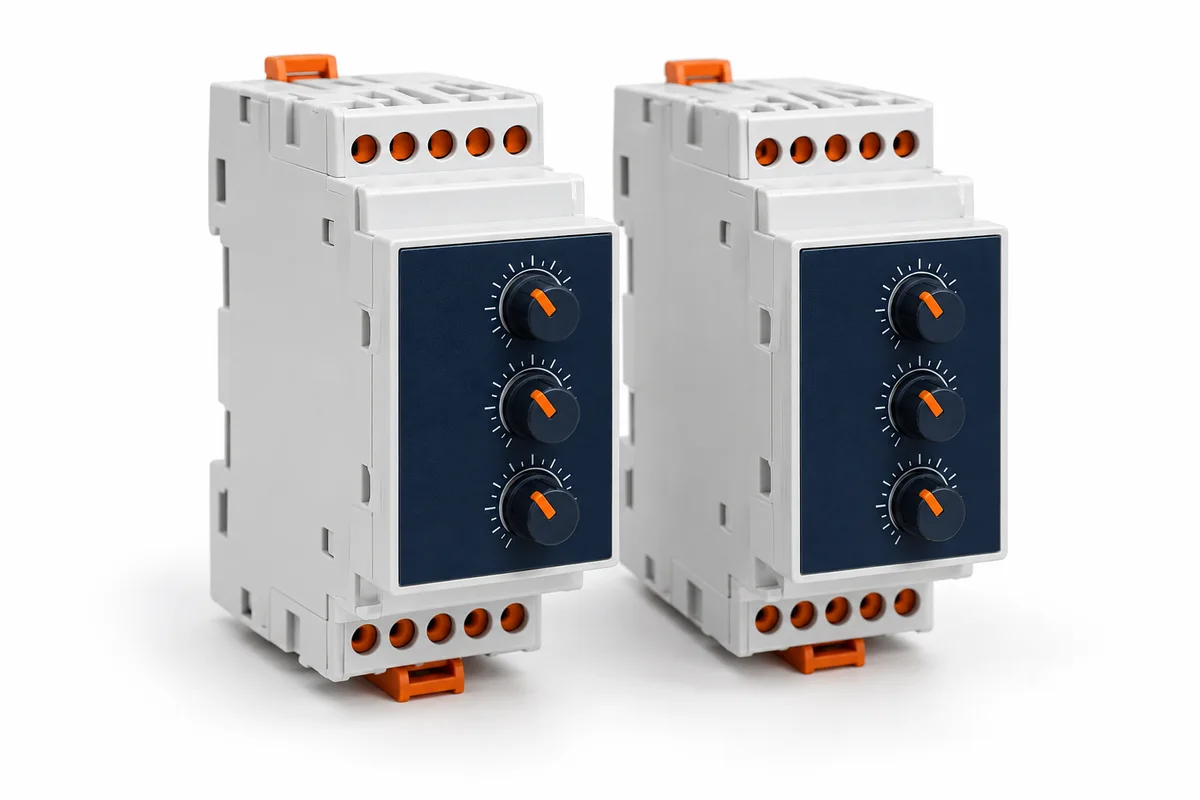
Automation & control
Identify phase, voltage or current conditions that need an alarm or trip.
Confirm: Monitored quantity · operating window · reset behaviour.
Compare selection details ↗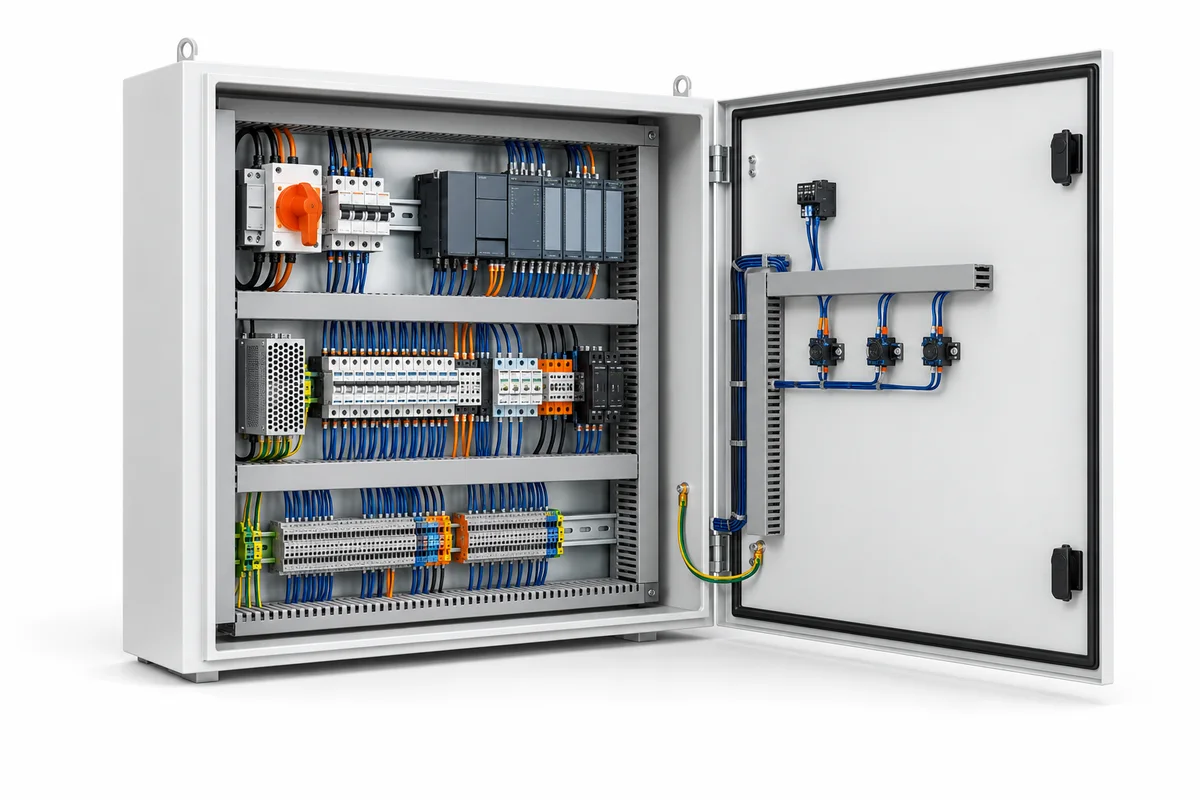
Automation & control
Define the operating sequence, inputs and operator interface together.
Confirm: I/O schedule · communications · operator screens.
Compare selection details ↗Explore all 36 component families ↗
METHODS & WORKED EXAMPLES
These examples use the default inputs. Change the live controls above for your own scenario; the reference examples below remain fixed.
Hydraulic power (kW) = 9.81 × flow (m³/h) × total head (m) / 3600. Divide by pump and motor efficiency fractions for electrical input.
Technical reference: KSB: pump power input. This reference does not certify the website calculation or an NPE assembly.