
Pump and level control
Define how pumps start, alternate, stop and recover before selecting the controls.
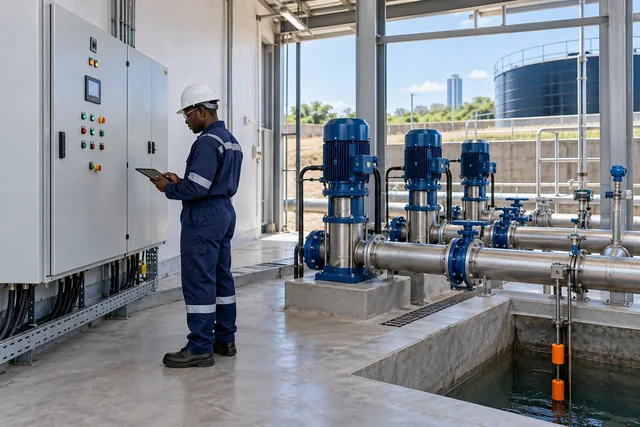
Decisions before procurement
| Decision | What to establish | Evidence to bring |
|---|---|---|
| Duty and standby | Match the required flow and head to the pump curve. Decide whether the standby unit replaces a failed duty pump or assists peak demand. | Pump curves, motor nameplates and operating hours |
| Level and dry-run protection | Separate normal start/stop levels from low-water inhibit, overflow alarms and sensor-failure actions. | Tank layout, sensor type and cause-and-effect schedule |
| Restart and override | Agree duty rotation, manual/automatic modes, fault reset and restart after power failure. | Control voltage, interlocks and alarm destinations |
Your project brief
- Motor kW, full-load current and measured supply
- Required duty point and tank/borehole layout
- Sensor interfaces, cable lengths and fail-safe behaviour
- Enclosure environment, access and reset policy
Confirm the actual supply and control voltage. Kenyan projects commonly specify 230/240 V single-phase or 400/415 V three-phase; the selected equipment must match the measured supply and manufacturer rating.
Engineering methods
Related guides
Choose a reference or send your BOQ
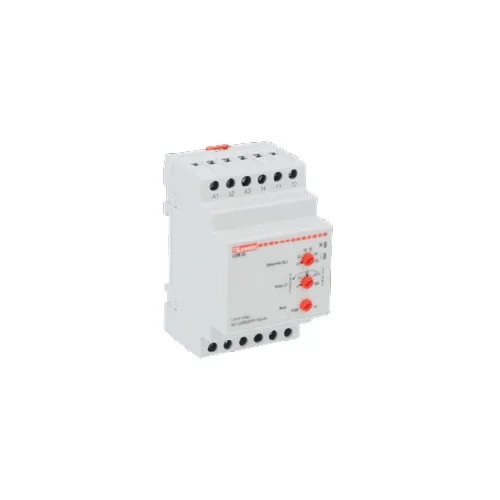
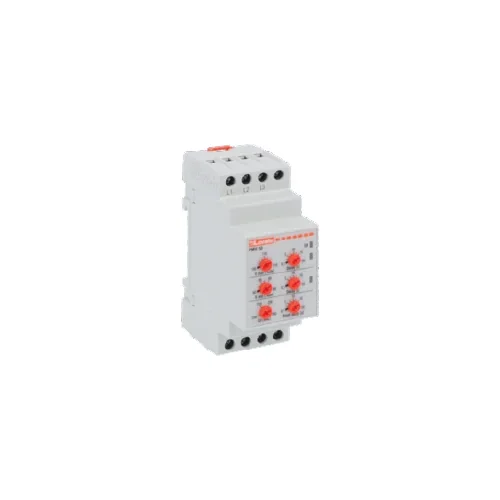
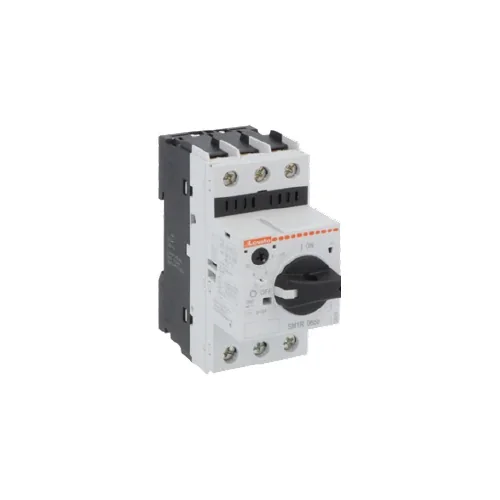
Compare relevant product families, then confirm the exact rating, control supply and duty. Price and availability are confirmed with your enquiry.


Technical references
These references support planning. The exact model documentation and a project-specific engineering review govern the final specification.